Activities organised by volunteers
in Laos
At the start of this year, Enfants d’Asie continues its work in the Luang Prabang and Vientiane regions of Laos by organizing activities for children focused on environmental issues and hygiene.
Raising awareness from an early age is essential because it fosters environmental consciousness, encourages lasting commitment to protecting our planet, helps prevent illnesses, and promotes the adoption of healthy daily habits.
Workshops organized in Luang Prabang and Vientiane
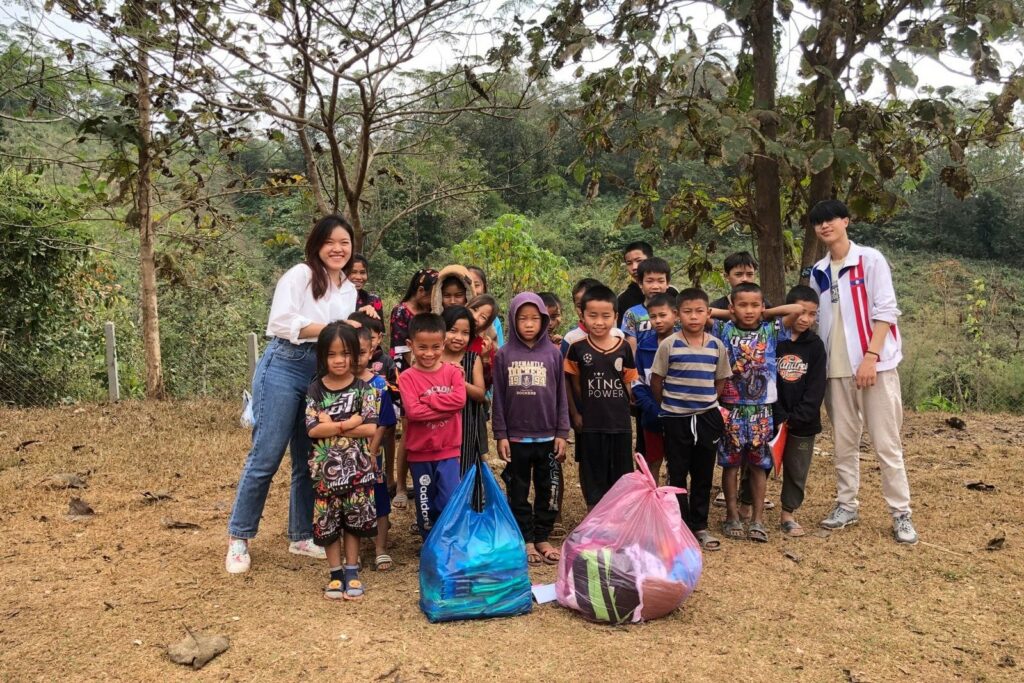
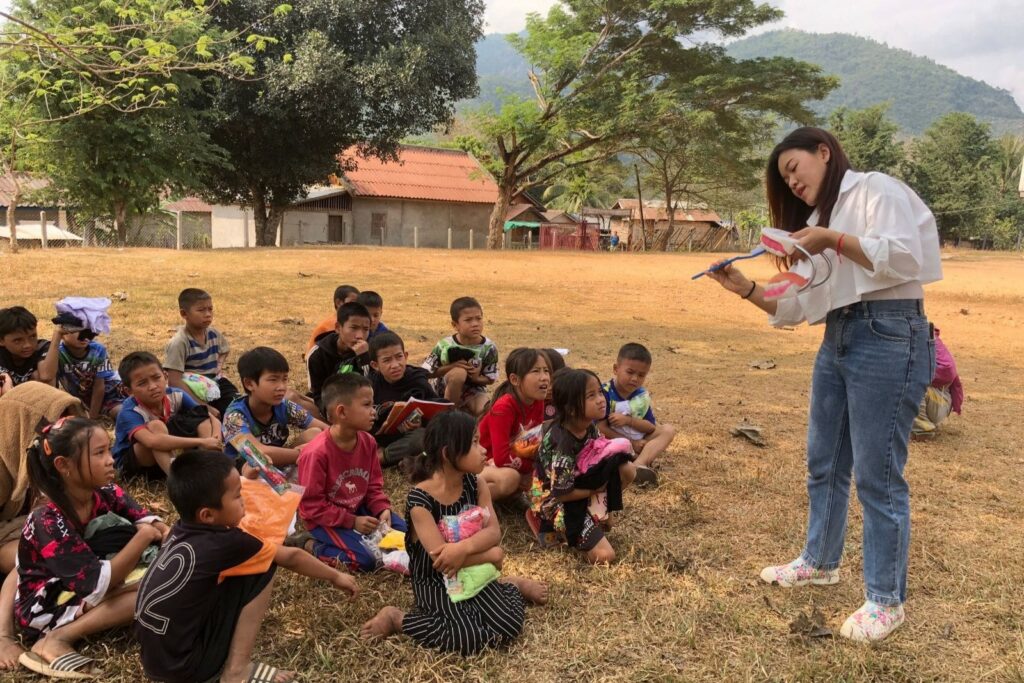
In Luang Prabang, in northern Laos, the workshop brought together 30 children, accompanied by 7 volunteer students from Souphanouvong University. An educational outing to the Green Jungle Park Conservation Center was organized to raise the children’s awareness of environmental issues. This park is a protected area featuring natural waterfalls, a botanical garden, and nature-related sports activities.
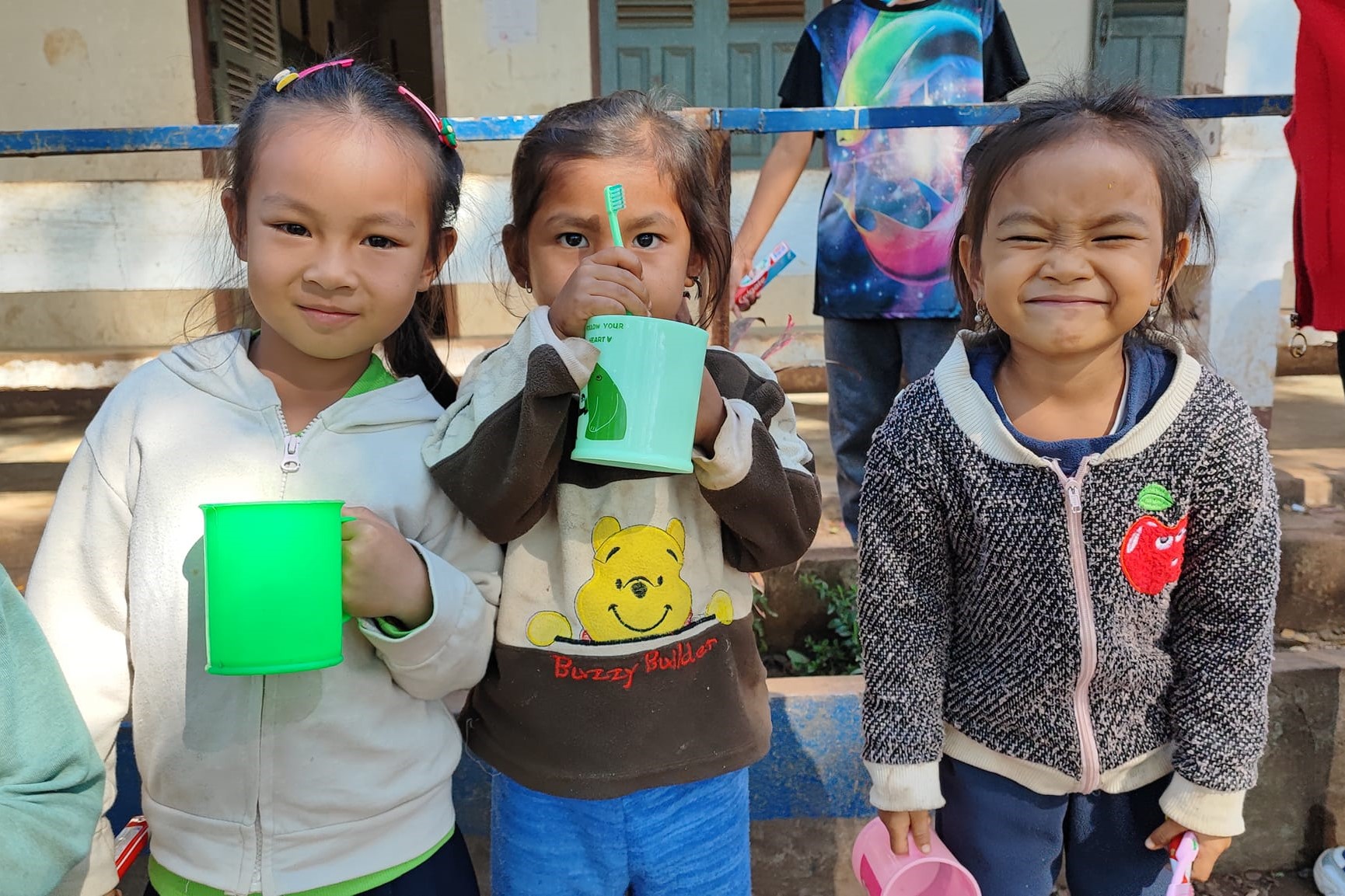
To teach children good hygiene practices, our teams also distributed kits containing toothbrushes, toothpaste, soap, and shampoo. This theme is important because it helps children develop healthy habits and stay in good health.
In Vientiane, the country’s capital, 37 children took part in an awareness activity during which they made recycled paper. Volunteer students from the National University of Laos also supervised this environmental awareness day.
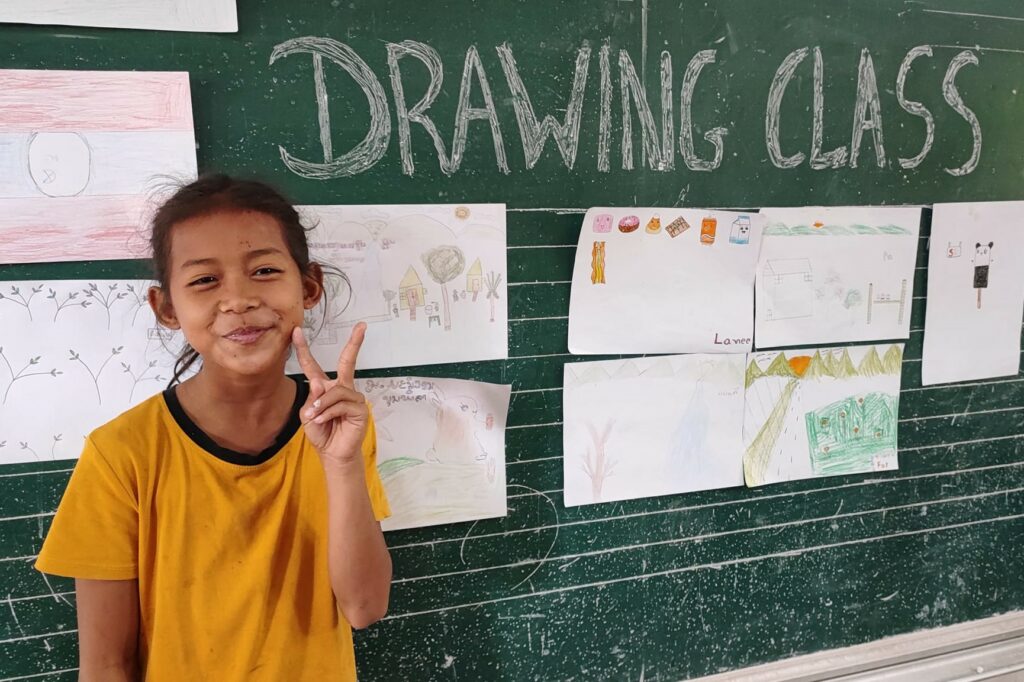
These activities take place year-round on weekends. They give young people the opportunity to explore new topics, helping to develop their critical thinking and curiosity.
Workshops organized in Luang Prabang and Vientiane
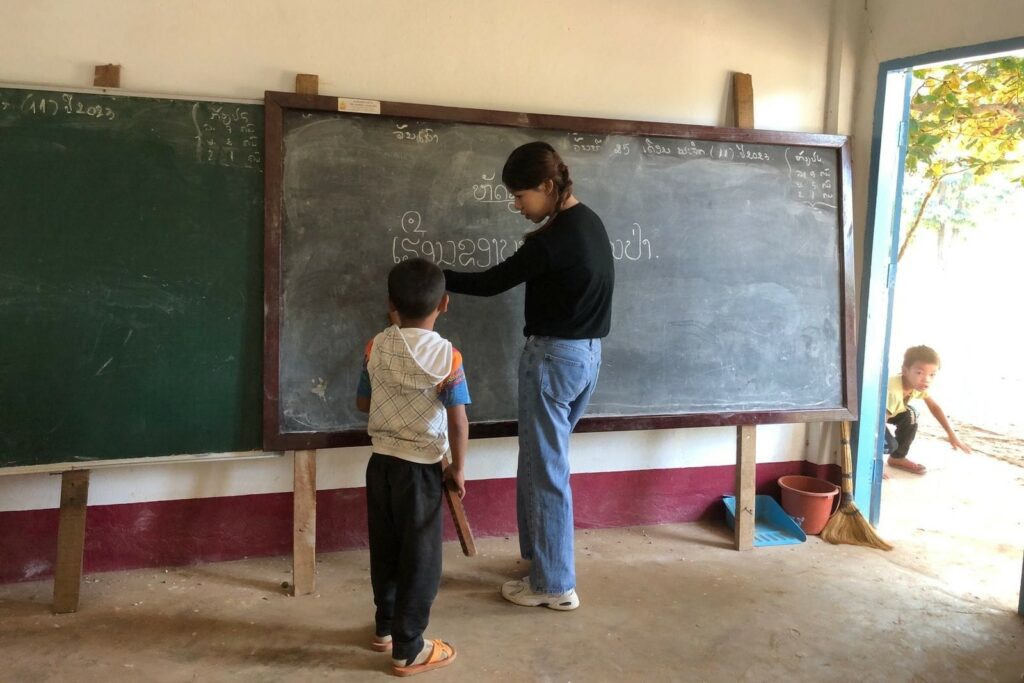
In both cities, around ten students are present each week. Their support benefits both the children and themselves. First, the regular interactions and small age gap help build a trusting relationship, allowing for stronger bonds. The involvement of these students also helps identify each child’s risks and needs more quickly.
Moreover, for the volunteers, these experiences with the youth are enriching. Through the training offered by Enfants d’Asie, they acquire new skills or strengthen existing ones. These trainings focus on practical daily skills, leadership, critical thinking, communication, and teamwork. Later, they can pass on their new knowledge to the younger participants. Finally, these trainings serve as preparation for entering the workforce.