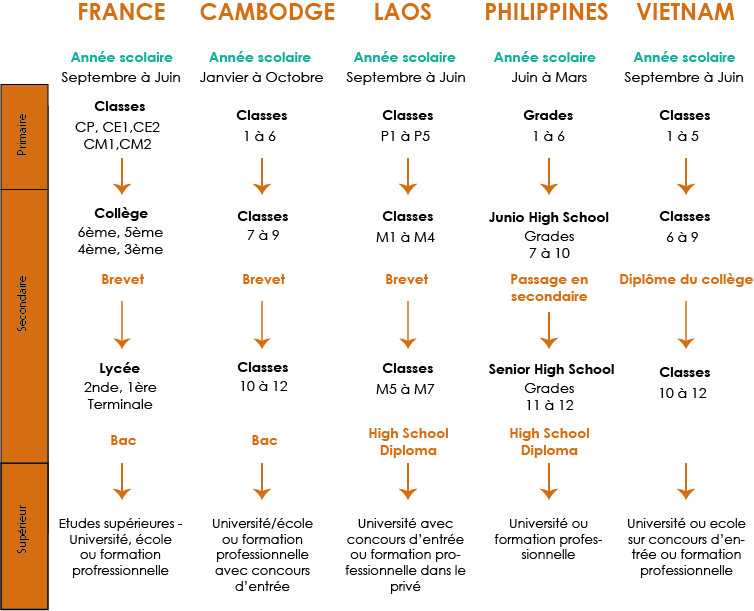
School systems
in the countries where we work
Education: A Path to a Better Future for Enfants d’Asie
The 2023 school year is a time of excitement and promise for millions of children around the world. It is also an opportunity for Enfants d’Asie to reaffirm its commitment to access to education for all!
Education: A Path to a Better Future for Enfants d’Asie
Education is one of the most effective tools for breaking the cycle of poverty. However, in Southeast Asia, access to quality education is far from guaranteed for all children. To better understand the challenges in the countries where we operate, we invite you to explore their school systems.
The school system in Cambodia
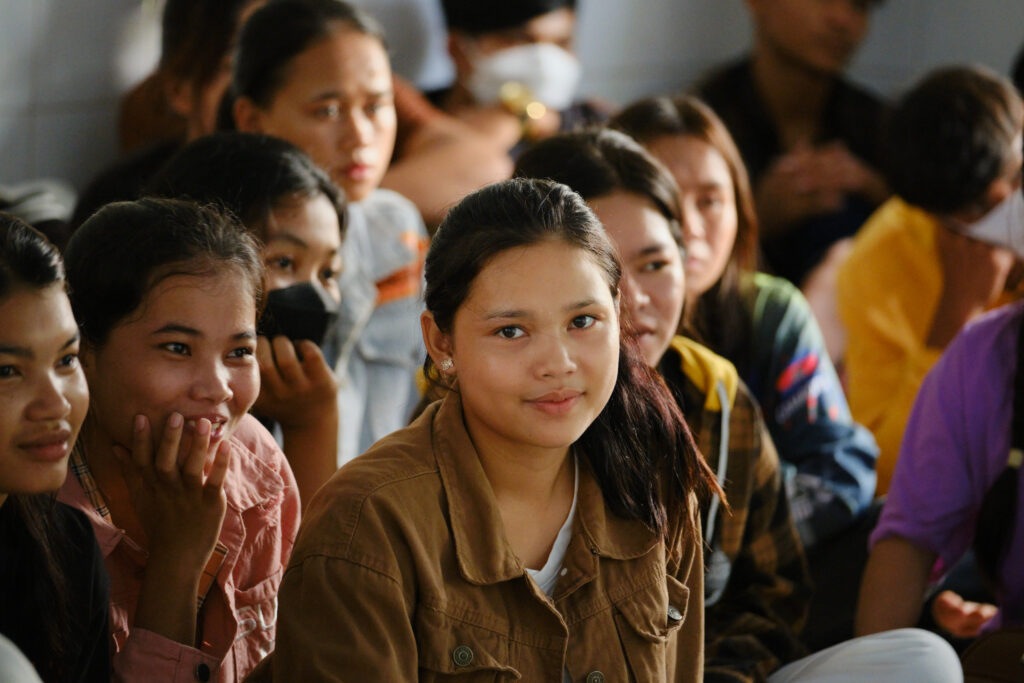
Although schooling is technically free, the Cambodian education system remains highly unequal. Families must bear the costs of uniforms, school supplies, textbooks, transportation, meals, and more.
The lack of adequate infrastructure, the low enrollment rates of the most vulnerable children, and the financial barriers faced by many families make access to education difficult.
Regarding higher education, there are currently 45 universities in Cambodia. Vocational training is also offered in some institutions. However, many underprivileged young people lack the resources to continue their studies after high school.
The school system in Laos
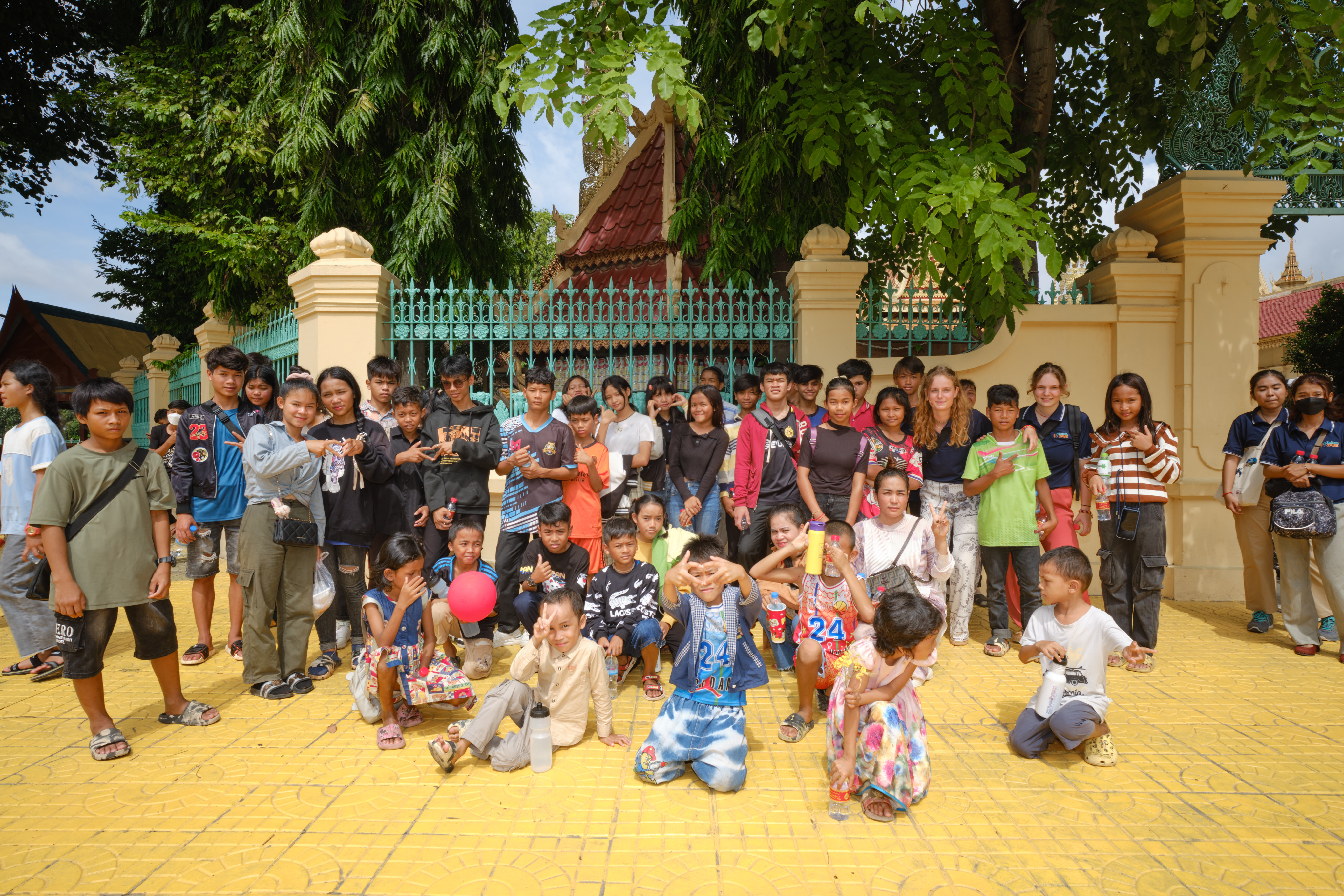
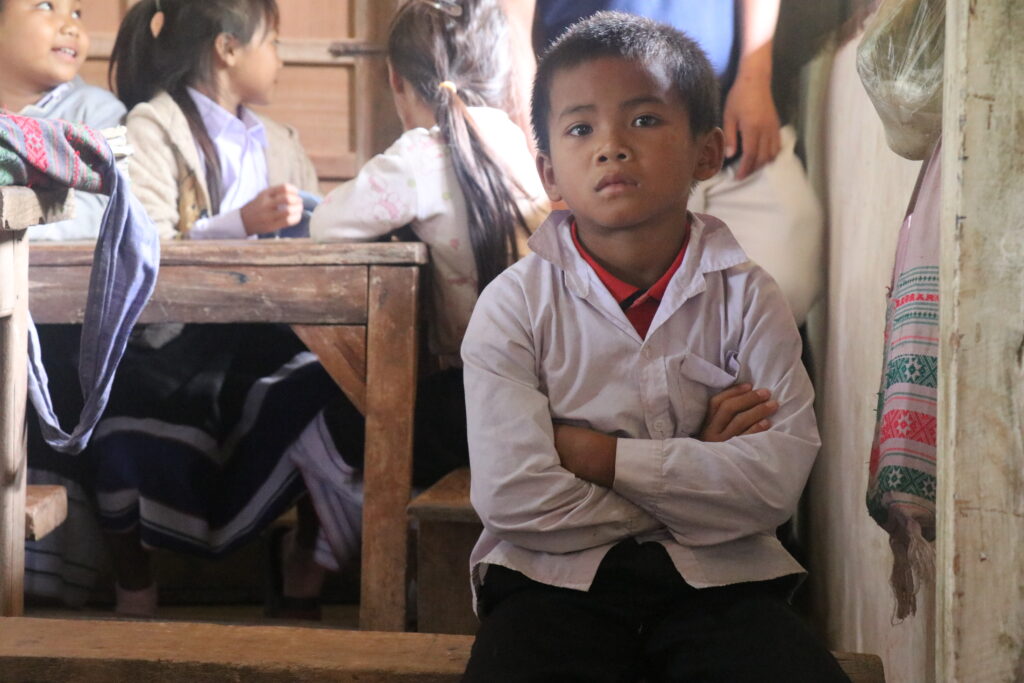
The Lao education system faces several challenges, including a lack of infrastructure in rural areas, low teacher training levels, limited educational resources, and the need to improve the quality of teaching.
In principle, public education at the primary and secondary levels in Laos is free. Although tuition fees are generally covered by the state, families face other indirect costs, such as purchasing school supplies, uniforms, and learning materials. These costs can vary depending on the region.
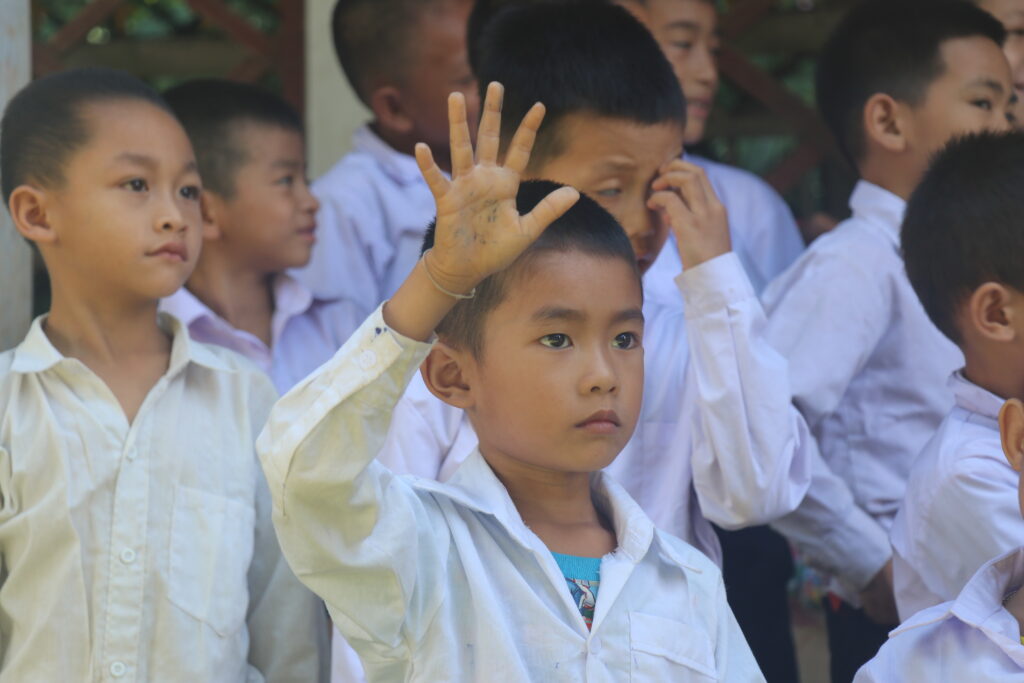
In public education, students are required to wear a school uniform. These uniforms are generally simple and vary in color from one school to another.
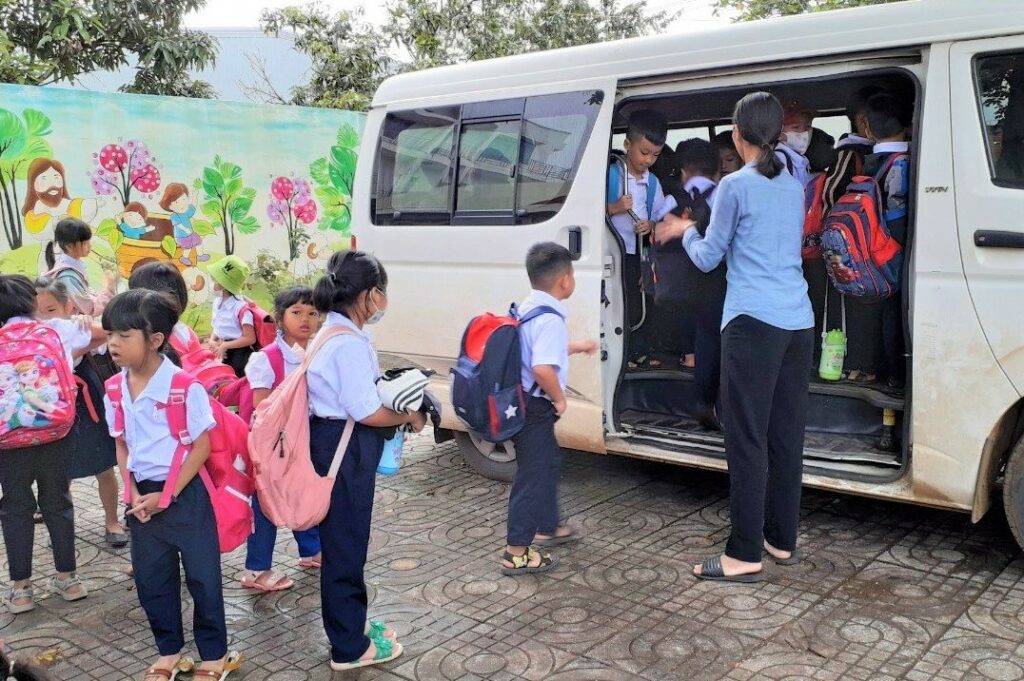
In Laos, access to education is a particular challenge due to the country’s mountainous geography. Schools are often far from villages, making transportation difficult. Enfants d’Asie works to make education accessible by building dormitories in remote areas, providing scholarships to students, and collaborating with local communities to promote education.
The school system in the Philippines
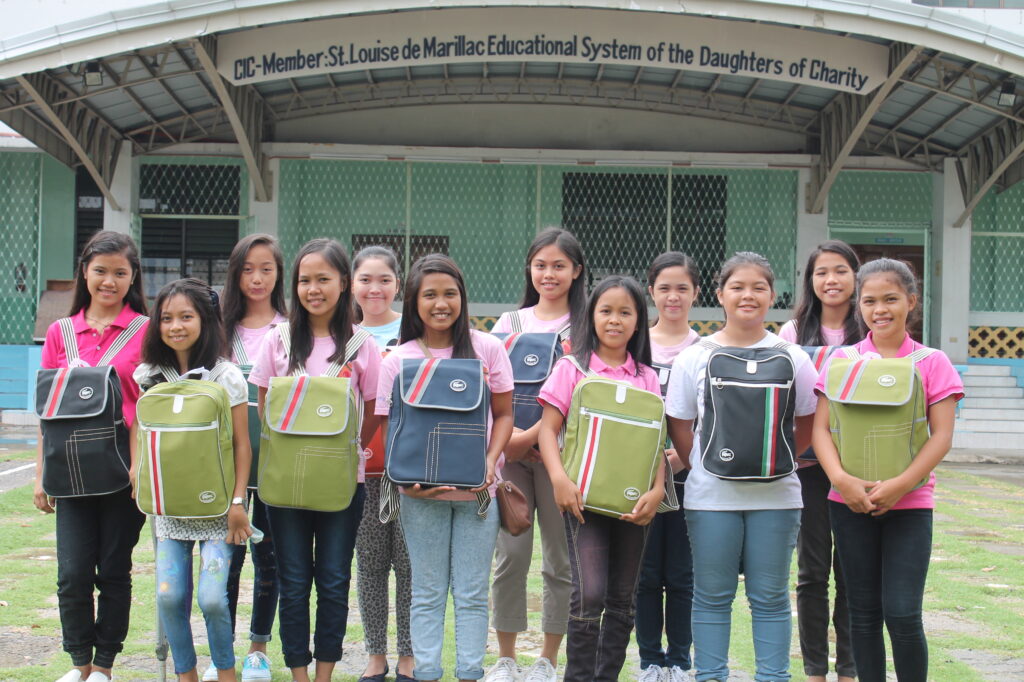
In the Philippines, although education is free and compulsory, schools are often overcrowded, and many children from rural areas drop out due to poverty or distance. Many schools are forced to offer half-day classes to accommodate all students. Public schooling is often associated with hardship, and wealthier parents send their children to private schools whenever possible.
Dans toutes les écoles publiques, il existe des associations parents-enseignants avec lesquelles Enfants d’Asie travaille activement.
Uniforms have not been mandatory in public schools since 2022, but some rules remain, such as the requirement for boys to keep their hair short.
Exams are held each semester across all subjects to assess the children’s level.
The school system in Vietnam
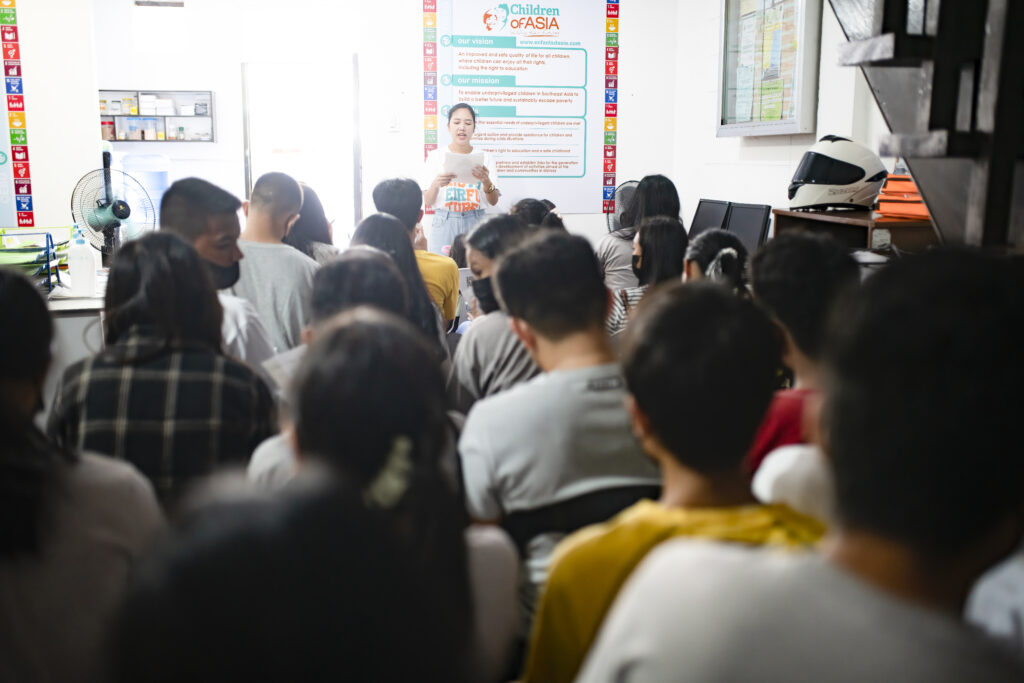
In Vietnam, schooling is compulsory until the end of middle school and is officially free. However, schools regularly request maintenance fees. Additionally, the cost of uniforms, textbooks, and school supplies can be significant. From middle school onward, public schools may also charge tuition fees.
Outside the major cities, there is a significant lack of school infrastructure relative to the number of children. Schools often organize classes on a half-day schedule.
Furthermore, teachers encourage students to take additional lessons to supplement the highly theoretical instruction at school. These paid courses are generally inaccessible to the most disadvantaged families, which deepens the inequalities between students.
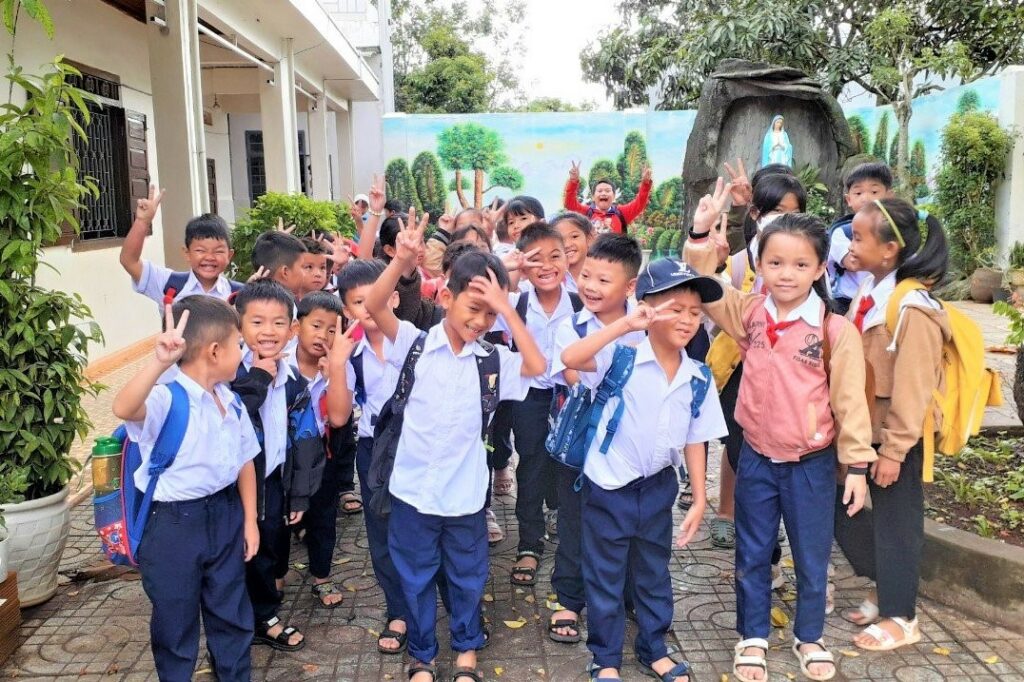
Uniforms are mandatory in public schools. In some areas, girls are required to wear traditional attire once a week.
The private system is relatively underdeveloped in Vietnam. Private preschools are the most common, but they are not officially recognized as schools. They serve as childcare centers for young children, helping to fill the gap in educational facilities in certain areas.
The engagement of Enfants d’Asie for Education
Enfants d’Asie works to provide children and young people in these countries with opportunities by improving access to quality education.
We believe that every child should have the opportunity to build a better future, particularly through education.